Dry, tight or dull skin does not automatically call for injections. By comparing what each treatment puts into or does to the skin, how long recovery takes, how durable the result is and which concern it actually addresses, you can choose a proportionate option rather than the most intensive one.
Key takeaways
- Choose a skin booster for intradermal hydration, not facial volume.
- Choose HydraFacial or a medi-facial for surface refreshment and minimal downtime.
- Ask about injector credentials, product batch number and emergency protocols.
- Match the treatment to dryness, texture, pigmentation, acne or volume loss.
What changes between a skin booster, mesotherapy, HydraFacial and medi-facial?
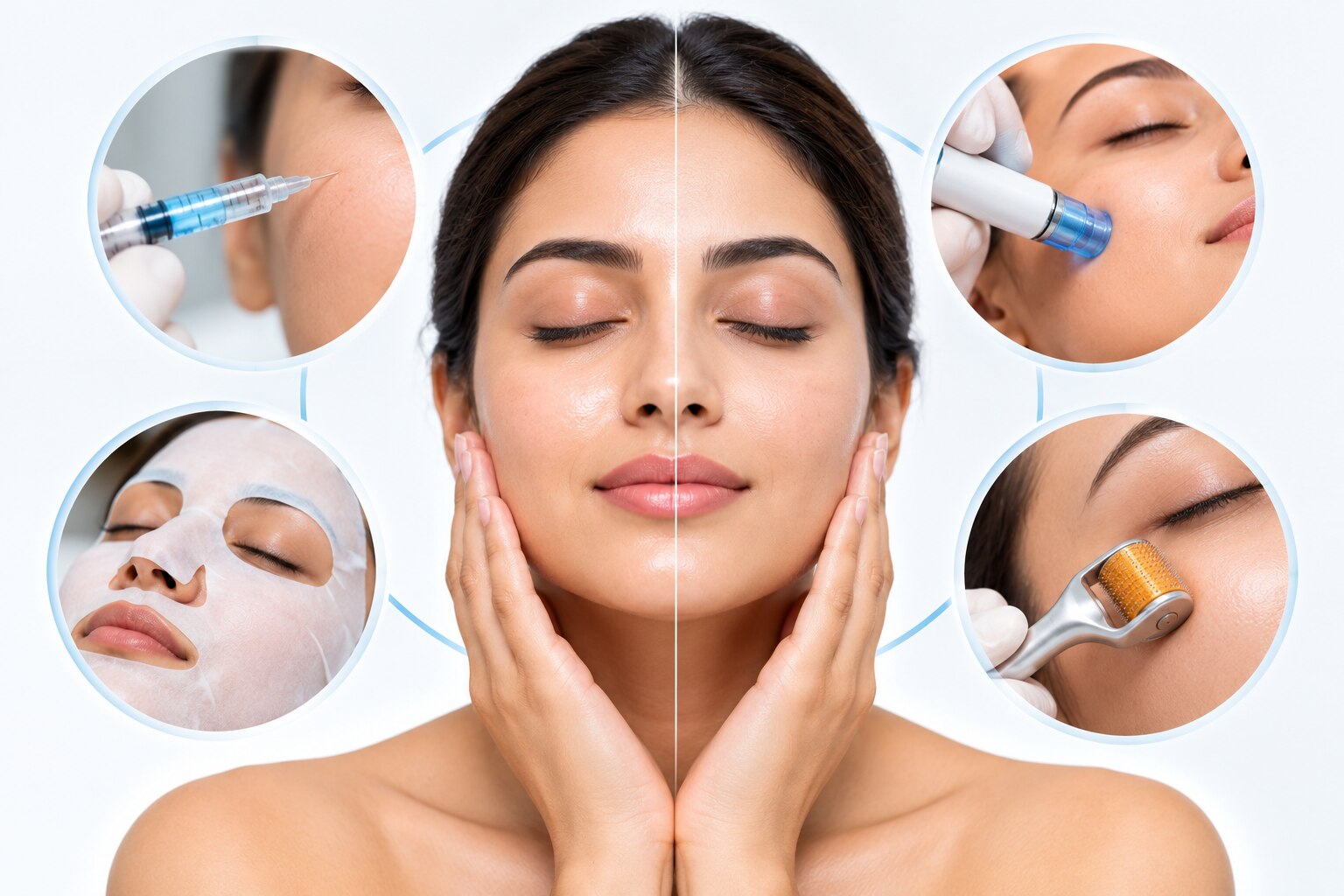
A skin hydration booster uses injections; HydraFacial and most medi-facials do not. The skin hydration treatment comparison depends on whether you want intradermal hydration, surface refreshment, or structural volume.
| Option | Substance and depth | Device or method |
|---|---|---|
| Skin hydration booster | Non-cross-linked or lightly cross-linked hyaluronic acid placed as shallow intradermal microdroplets, often about 1–2 mm deep | Fine needle, cannula, or automated injector |
| Mesotherapy | Hyaluronic acid alone or a mixed solution containing vitamins, amino acids and other ingredients; injection depth varies from superficial dermis to about 1–4 mm | Multiple-needle injector or manual mesoneedling |
| HydraFacial | Topical cleansing, exfoliating acids, and serum containing hydrating ingredients such as hyaluronic acid; nothing is injected | Vortex vacuum handpiece |
| Medi-facial | Topical serums, masks and peels selected by the clinic; ingredients and steps have no fixed standard | Devices such as ultrasound, oxygen infusion, LED or microdermabrasion |
| Dermal filler | Cross-linked hyaluronic acid or another approved filler placed in deeper dermal, subcutaneous or periosteal planes | Needle or cannula for volume and contouring |
For skin hydration booster versus other treatments in Mumbai, the key distinction is purpose rather than location. A booster improves skin quality, fine texture and elasticity without meaningfully reshaping the face; a dermal filler restores volume, defines contours or softens a fold.
Confirm the exact product, formulation and injection plane before treatment because “mesotherapy” and “medi-facial” describe broad protocols, not single standardised procedures.
What happens during the appointment and recovery period?
The appointment starts with a medical consultation, not the needle. Your clinician should examine your skin and postpone injections over active infection, marked inflammation or an open wound. Discuss allergies, previous filler reactions, medicines that increase bruising, pregnancy or breastfeeding, and any history of cold-sore reactivation.
- Your face is cleansed and disinfected. A topical anaesthetic may remain for about 20–30 minutes before it is removed.
- For a skin booster, the clinician makes multiple superficial dermal injections of hyaluronic acid. Expect brief stinging, pressure and occasional pinpoint bleeding.
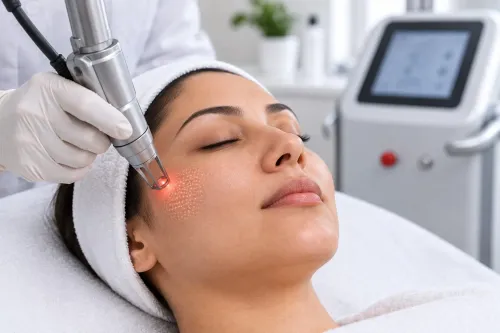
- For a HydraFacial-type or medi-facial treatment, a device or handpiece cleanses, exfoliates and applies topical solutions instead of creating injection punctures. Numbing is usually unnecessary.
- The clinician reviews immediate aftercare and records the product, batch number and treatment sites.
Redness, tenderness, small raised bumps, swelling, bruising or temporary lumps can follow injections. These usually settle over several days; device treatments more often cause brief tightness or sensitivity. Contact the clinic promptly for worsening pain, spreading redness, skin colour change, blisters or visual symptoms.
Keep treated skin clean, avoid rubbing, strenuous heat and alcohol-based products for the period advised, and use broad-spectrum SPF 30 or higher every day. Do not apply makeup over injection points until they have closed; many protocols use a 12-hour wait.
After a facial, reapply makeup only when the skin feels comfortable and the provider permits it. Moisturiser and sunscreen remain necessary after any option.
How quickly do results appear, and how long do they last?
A HydraFacial can make skin look brighter immediately, while an injectable booster usually needs days to weeks to show its full effect. Compare the trade-off, not just the first mirror check: quick glow usually fades sooner, while deeper skin-quality treatment brings more discomfort and maintenance.
| Option | Visible change and duration | Discomfort and downtime | Sessions and maintenance |
|---|---|---|---|
| Skin hydration booster | Smoother, fresher-looking skin develops over days to weeks. Improvement commonly lasts weeks to months, depending on the hyaluronic-acid product and your skin. | Pinch or stinging from shallow dermal injections; small bumps, redness or bruising can interrupt plans briefly. | Often planned as an initial series, followed by maintenance injections. It does not replace moisturiser, sunscreen or treatment for eczema and dermatitis. |
| HydraFacial | Immediate hydration and surface brightness; the effect commonly fades within days to a few weeks. | Usually comfortable, with little or no downtime. | One session can suit an event; repeat treatments maintain the temporary surface effect. |
| Medi-facial | A short-term glow and smoother surface after topical products and device steps; duration is usually shorter than an injectable result. | Mild warmth, tingling or sensitivity; downtime depends on the products or peel used. | A course may be suggested, with repeat sessions for upkeep. |
| Mesotherapy | Results vary because injections may contain hyaluronic acid or a mixed nutrient solution. Changes often appear across several sessions and last weeks to months. | Multiple injections mean more stinging, redness, swelling or bruising than a device facial. | Usually requires a series, then maintenance; ask for the exact substance and injection depth. |
For a skin hydration treatment comparison, ask whether the goal is surface glow or intradermal skin quality. A booster is not a dermal filler: it targets hydration and fine texture, not structural volume or contour.
Which option fits dryness, texture, pigmentation, acne or volume loss?
The best treatment for dehydrated skin is barrier repair when dryness comes with itching, scaling, redness or cracking. Use a gentle cleanser, moisturiser with humectants, emollients and occlusives, plus broad-spectrum sunscreen; persistent symptoms need dermatological assessment rather than repeated injections.
For hydration booster alternatives in Mumbai, match the treatment to the complaint:
| Concern | Better fit | Why and trade-off |
|---|---|---|
| Barrier dryness | Topical barrier repair | Lowest risk; a booster will not correct eczema, dermatitis or irritation |
| Fine creasing, dullness | Skin hydration booster | Intradermal hyaluronic acid can improve hydration and fine texture; expect injections, maintenance and temporary results |
| Rough texture or acne scars | Microneedling | Controlled remodelling targets texture, not simple dehydration; redness and multiple sessions are common |
| Laxity with texture | RF microneedling | Heat may improve tightening, but burns, pigment change and unwanted volume loss are risks |
| Pigmentation or acne marks | Superficial chemical peel or pigment plan | Depth is selected carefully; darker or recently tanned skin faces post-inflammatory hyperpigmentation risk |
| Active acne | Medical acne treatment | Do not use a booster to treat inflamed lesions; control the disease first |
| Enlarged pores | Microneedling, peel or topical treatment | Results depend on whether oil, scarring or laxity causes the appearance |
| Lost facial volume | Dermal filler | Filler restores structure and contour; a booster improves skin quality, not volume |
A HydraFacial or medi-facial mainly gives a short-lived surface effect. Choose an injectable booster only if you specifically want temporary skin-quality improvement and accept injection-related risk.
How can you screen a hydration treatment provider in Mumbai or Juhu?
Active infection, open wounds, or marked inflammation at the injection sites makes an injectable booster the wrong choice that day. Choose barrier repair, medical treatment, a facial, microneedling or another option when your actual concern is dryness, acne, pigmentation, scarring, redness or laxity rather than intradermal skin quality.
Before booking, give the injector a complete history:
- Pregnancy or breastfeeding, allergies, autoimmune disease and previous reactions to fillers or skin injections
- Previous herpes or cold-sore reactivation near the treatment area
- Current infection, recent dental work or procedures, and any prior filler complications
- Aspirin, ibuprofen, anticoagulants, steroids, supplements or other medicines that increase bruising
- Recent tanning, chemical peels, laser treatment, microneedling or active prescription acne treatment
For skin booster hydration options in Juhu, ask a clinic such as Inshine Aesthetics these questions before paying:
- What is the product’s brand, exact hyaluronic-acid formulation, concentration, batch number and expiry date? Is it designed for dermal injection rather than volume correction?
- Who will inject it, what medical qualification and injection-specific training do they hold, and how many comparable treatments do they perform?
- What symptoms indicate infection, nodules or vascular occlusion: unusual severe pain, blanching, mottled skin, coolness or visual change?
- If a blood vessel is blocked, will the injector assess you immediately, use hyaluronidase for a hyaluronic-acid product when appropriate, and arrange urgent ophthalmology or hospital care for visual symptoms?
- What is the clinic’s written emergency pathway, and who remains available after you leave?
If answers are vague, choose a different provider.
Related services
ADVANCE TREATMENT A Skin Hydration Booster is a non-surgical cosmetic treatment designed to improve skin quality and deliver intense hydration by stimulating collagen... View service → |
Skin Treatment HydraFacial Revitalize Your Skin: HydraFacial Treatment Deep cleanse, hydrate, and nourish your skin with our HydraFacial treatment. |
Frequently asked questions
What is the difference between a skin booster, mesotherapy, HydraFacial and medi-facial?
A skin booster uses injections placed within the skin for hydration. Mesotherapy uses multiple small injections, with ingredients varying by provider. HydraFacial combines cleansing, exfoliation, extraction and topical infusion. A medi-facial is a clinician-led facial using selected topical products and devices without the same injectable approach.
What happens during a hydration treatment appointment, and how long is recovery?
An appointment starts with a consultation and skin assessment. Injectable treatments involve numbing, antiseptic preparation and multiple needle or cannula placements, followed by aftercare instructions. HydraFacial and medi-facials usually involve cleansing, exfoliation and topical products. Injection sites can show redness, swelling or bruising, while non-injectable treatments usually have less downtime.
How quickly do hydration treatment results appear, and how long do they last?
Surface treatments can leave skin looking fresher soon after the appointment, while injectable results develop as swelling settles and the skin responds. Duration depends on the product, technique, skin condition and maintenance plan, so ask the provider for a treatment-specific timeline rather than a fixed promise.
Which hydration treatment suits dryness, texture, pigmentation, acne or volume loss?
Skin boosters suit intradermal dehydration and fine texture concerns. HydraFacial or medi-facials suit short-term surface refreshment. Pigmentation and acne need a diagnosis and targeted plan rather than hydration alone. Volume loss requires an assessment for structural treatments; a hydration booster is not a replacement for a volumising injectable.
How can you screen a hydration treatment provider in Mumbai or Juhu?
Check who will perform the procedure, ask to see relevant medical registration and training, confirm the product name and sealed packaging, and record the batch number and expiry date. Ask about sterile technique, expected side effects, emergency support and follow-up. Avoid providers who promise permanent results or refuse to identify the injectable product.
Related services
Skin Treatment Glow Up with Medi Facial Get a deep cleanse and nourishment with our Medi Facial treatment. View service → |
Skin Treatment Mesotherapy Rejuvenate Your Skin with Meso Therapy A non-invasive treatment that delivers nutrients directly to the skin, promoting collagen production and... |
Keywords