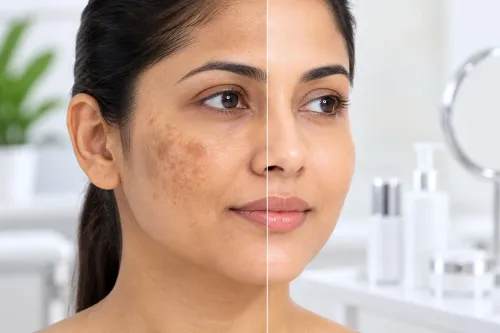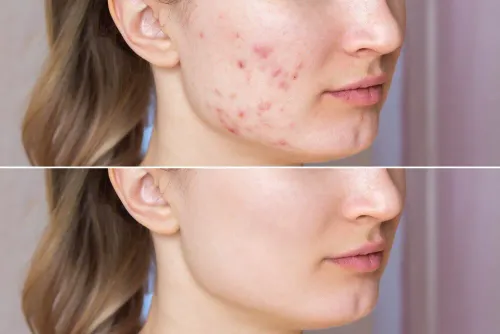
Uneven tone can come from tanning, acne marks, melasma, sun spots or post-inflammatory hyperpigmentation, and each pattern changes the safest treatment choice. By the end, you will know how peel depth and acid type relate to your concern, which health and skin factors to disclose, and how to compare a nearby clinic before booking.
Key takeaways
- Identify the pigmentation cause before choosing a peel.
- Postpone treatment if your skin barrier is irritated or actively inflamed.
- Compare clinics by consultation, patch testing, credentials and aftercare.
- Plan peeling, sun avoidance and makeup restrictions around your schedule.
Match the peel to the cause and depth of uneven tone
Diagnosis comes before the acid because melasma, sun spots, post-inflammatory hyperpigmentation and medication-related pigmentation have different triggers. A peel can brighten surface discoloration while leaving the cause untouched, so ask: is a chemical peel for uneven skin tone the right decision for this diagnosis?
| Pattern | Typical clue | Peel relevance |
|---|---|---|
| Melasma | Symmetrical brown patches, often on cheeks, forehead or upper lip | A peel may help temporarily; ultraviolet and hormonal triggers can bring it back |
| Sun spots | Discrete patches linked to cumulative sun exposure | A superficial or stronger peel may target surface pigment |
| Post-inflammatory hyperpigmentation | Marks left after acne, irritation or injury | Treat the inflammation first; irritation from a peel can deepen the marks |
| Medication-related pigmentation | Darkening that follows a medicine or treatment | Review the trigger; peeling alone does not remove it |
A superficial peel works mainly within the epidermis and is commonly considered for mild tanning, dullness, mild post-acne marks and surface texture. Glycolic acid and lactic acid are alpha-hydroxy acids for superficial exfoliation; salicylic acid fits acne or oiliness-related discoloration, while mandelic acid offers a gentler superficial approach.
TCA can provide a stronger superficial or medium-depth treatment. Deep peels reach the upper dermis and bring substantially more recovery, pigment-change and scarring risk. The ingredient name does not establish strength: concentration, pH, number of coats and contact time all matter.
Pigmentation can return when ultraviolet exposure, inflammation or hormonal triggers continue. That makes diagnosis and trigger control more important than choosing the strongest acid.
Check whether your skin is ready for a peel
Before paying a deposit, complete this screening checklist with the clinician:
1. Ask for an assessment of your Fitzpatrick skin type, tanning response and history of post-inflammatory hyperpigmentation or hypopigmentation. Darker or easily tanning skin may need a milder peel, fewer coats, pretreatment or another treatment instead of the strongest formulation.
2. Report recent sun exposure or sunburn, active acne, eczema, rosacea, dermatitis, open wounds and any bacterial, viral or fungal infection. Uncontrolled dermatitis, open wounds, active infection and recent sunburn require postponement.
3. Disclose pregnancy or breastfeeding, allergies, all medicines, previous keloids or abnormal scarring, cold sores and every recent cosmetic procedure. Facial peels can reactivate herpes simplex; ask whether antiviral prophylaxis is appropriate for you.
4. Name every product used recently, including isotretinoin, prescription or over-the-counter retinoids, benzoyl peroxide, exfoliating acids and prescription lightening medicines. Do not omit waxing or threading in the treatment area, laser resurfacing or another procedure that weakened the skin barrier.
5. Ask whether the proposed peel fits your skin history and pigment risk. The clinician may postpone treatment after recent waxing, threading, laser resurfacing or another barrier-disrupting procedure, even when the skin looks calm.
Bring product names, treatment dates and photographs of previous reactions. A complete history helps prevent a peel from turning irritation into persistent uneven colour.
Compare a Juhu clinic by clinical process, not distance or price
A chemical peel treatment near Juhu in Mumbai should be compared by clinical process, not by distance or price. Ask who examines your skin, who performs the peel, and whether the pigmentation is assessed in person. The provider should explain the suspected diagnosis—such as melasma, sun spots or post-inflammatory pigmentation—not simply name an acid.
| Clinic check | What a suitable answer includes |
|---|---|
| Skin assessment | A qualified clinician examines the pigmentation and relevant medical history |
| Treatment responsibility | The person examining you is identified, and the peel performer’s training is clear |
| Appointment format | The clinic states whether the visit includes assessment and treatment or consultation only |
| Safety planning | Written aftercare, follow-up instructions and a complication plan are provided |
Before booking a chemical peel Juhu appointment, request:
- The proposed acid, concentration, pH, number of coats and contact-time approach
- Expected downtime, alternatives and reasons this formulation suits your diagnosis
- Written aftercare, follow-up timing and instructions for worsening pain, blistering or infection
For a chemical peel clinic near me search, a short route from Juhu helps with the consultation, follow-up and an unexpected review. Convenience does not establish suitability.
Inshine Aesthetics is one Mumbai option you can evaluate using these same questions, rather than treating location or a personalised consultation claim as proof that a peel is appropriate.
A low advertised price cannot establish safety or value. A named acid cannot do that either; concentration, pH, coats, contact time and clinical judgement determine what you are actually being offered.
Related services
Skin Treatment Treatment Renew Your Skin with Advanced Chemical Peel Treatments Achieve smoother, clearer, and more radiant skin with professional chemical peel... View service → |
Skin Treatment Pigmentation Fade Pigmentation: Effective Treatment Solutions Say goodbye to uneven skin tone with our advanced treatments. |
Know what happens during treatment and how recovery affects plans
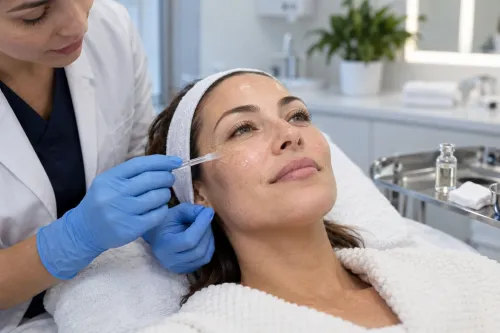
1. The appointment starts with cleansing to remove makeup, oil and debris, followed by degreasing so the formulation spreads evenly. The clinician then protects sensitive areas such as the eyelids, nostril edges, lips and corners of the mouth.
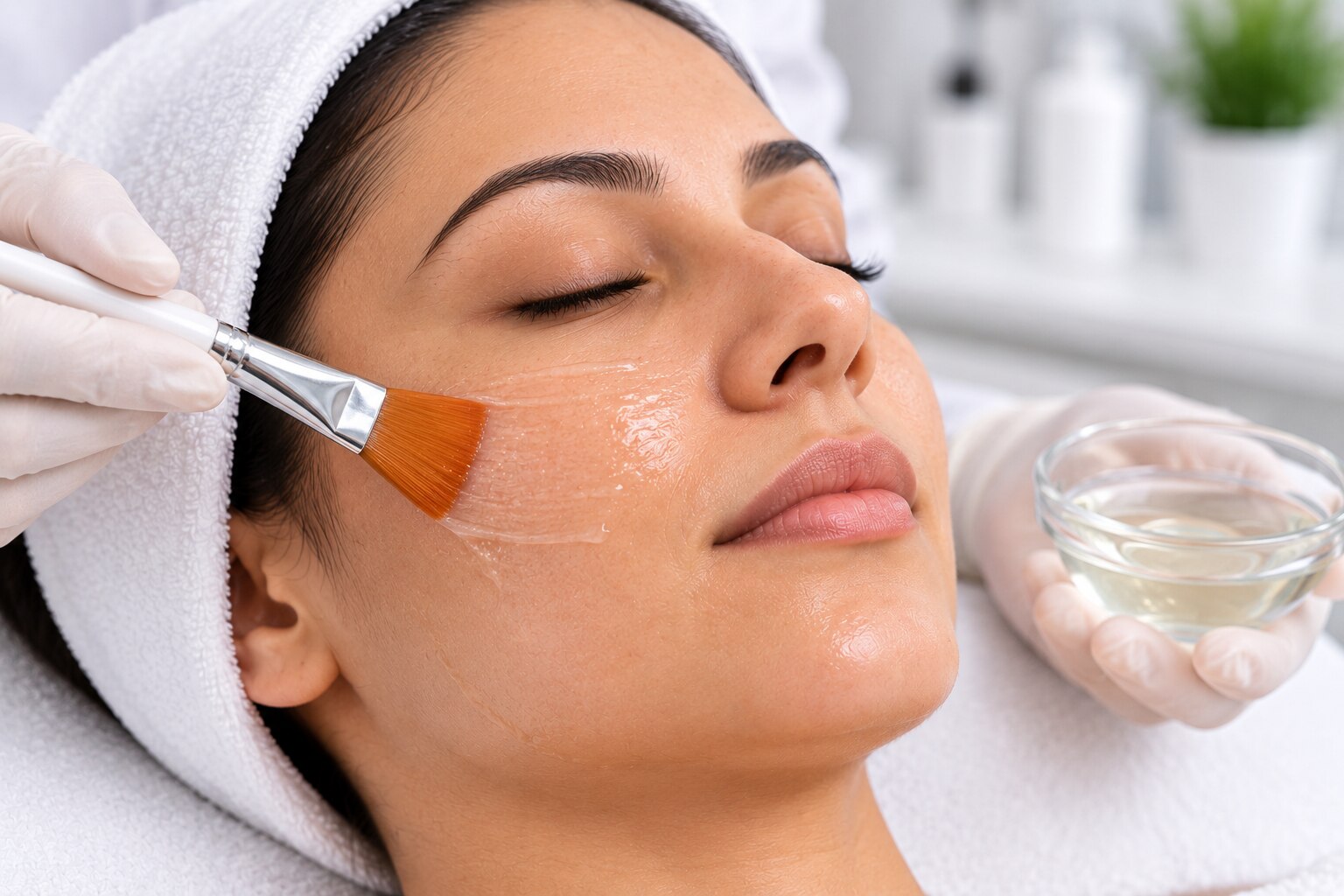
2. The formulation is applied in planned coats. The clinician monitors contact time and watches your skin response rather than treating visible peeling as a target.
3. Tingling, warmth or mild stinging can be normal. Report escalating, severe or sharply painful discomfort immediately; do not try to tolerate it.
4. The clinician neutralises the peel when that product requires neutralisation, removes it thoroughly and applies post-treatment sunscreen. Broad-spectrum sunscreen and avoiding deliberate sun exposure are part of pigmentation treatment, not optional finishing advice.
5. Recovery depends on depth. A superficial peel can cause redness, tightness, scaling or flaking. A medium-depth peel can cause marked redness, swelling and crusting, with a longer recovery. A deep peel requires the most substantial medical aftercare.
6. The exact timeline depends on the formulation, concentration, number of coats, your skin response and the clinician’s instructions. Ask when makeup, shaving, swimming and strenuous exercise are appropriate before arranging work, events or travel.
Visible peeling is not a scorecard: an effective superficial peel may produce little shedding. Ask for written aftercare and contact instructions, then follow them rather than adding scrubs or acids.
Set realistic results and recognise complications early
A peel can lighten uneven tone, but it does not permanently erase it or automatically treat melasma, active acne, sun exposure or another underlying cause. Melasma, post-inflammatory hyperpigmentation and medication-related pigmentation can return while their triggers continue.
Improvement may require a planned series or maintenance treatments. The interval depends on the diagnosis, peel depth and your skin’s response; repeating too soon can cause irritation and post-inflammatory hyperpigmentation instead of faster results.
Do not substitute high-strength home or salon peels for supervision. Concentrated trichloroacetic acid (TCA), phenol, glycolic acid or salicylic acid can cause chemical burns, infection, colour changes and scarring.
Seek prompt clinical advice for:
- Rapidly increasing pain
- Blistering beyond the treated area
- Spreading redness or warmth
- Pus or fever
- Eye symptoms
- Difficulty breathing
Contact the treating clinician or seek urgent medical assessment. Do not pick, scrub or apply another exfoliant.
Before you book chemical peel in Mumbai, confirm:
- The diagnosis being treated
- The peel depth and formulation
- Expected downtime
- Written aftercare
- Follow-up arrangements
- Alternatives to a peel
- The plan for complications
Consent only after these answers are clear.
Frequently asked questions
How do you match a chemical peel to uneven skin tone?
Match the peel to the diagnosis and depth of discoloration. Melasma, sun spots, post-inflammatory hyperpigmentation and medication-related pigmentation need different treatment plans.
When should you avoid or postpone a chemical peel?
Postpone treatment when your skin is irritated, sunburned, infected, actively inflamed or recovering from another resurfacing procedure. Discuss medicines and recent treatments during consultation.
How should you compare a chemical peel clinic near Juhu?
Compare the consultation process, clinician qualifications, diagnosis, product labelling, patch-testing policy, consent process, aftercare instructions and complication support instead of distance or price alone.
What recovery should you plan after a chemical peel?
Plan for redness, tightness, peeling and temporary sensitivity according to the peel depth. Follow sun protection and product restrictions, and schedule treatment away from important events.
What complications require prompt medical advice after a peel?
Contact the clinic promptly for worsening pain, swelling, blistering, pus, spreading redness, severe darkening or lightening, or symptoms affecting the eyes.
Keywords