The right hair-loss treatment depends first on why you are losing hair, not on which procedure sounds most advanced. By comparing diagnosis, evidence, time, risks, maintenance and total treatment commitment, you can judge whether PRP belongs in your plan or whether another option fits better.
Key takeaways
- Confirm the hair-loss pattern with trichoscopy before choosing PRP.
- Compare PRP with medicines, devices and procedures by evidence and maintenance.
- Judge PRP results only after a planned course and several months of follow-up.
- Check eligibility, sterile preparation, clinician credentials and emergency protocols.
Diagnose the hair loss before choosing a procedure
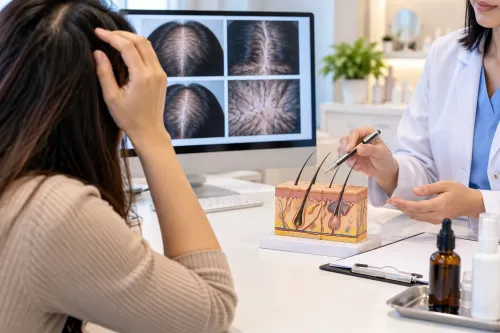
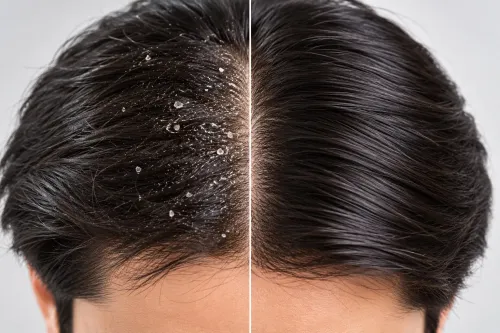
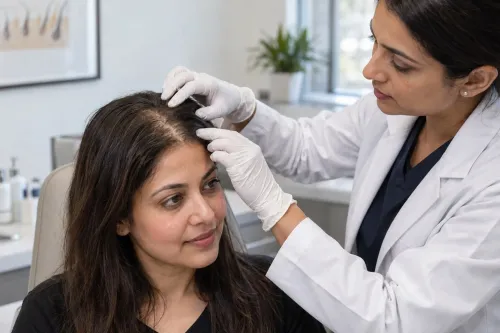
PRP is primarily studied for androgenetic alopecia, the gradual widening-part or receding-hairline pattern. It can improve hair density or thickness, but it does not permanently stop this chronic process. A trichoscopy examination can distinguish pattern loss from shedding, broken hairs and scalp inflammation; ferritin, thyroid tests or vitamin measurements can identify treatable contributors.
| Hair-loss pattern | Role of PRP | Approach that should come first |
|---|---|---|
| Androgenetic alopecia | Possible add-on for density | Stabilise loss with an evidence-based medical plan |
| Telogen effluvium | Limited role | Find and correct iron deficiency, thyroid disease, illness or medication triggers |
| Alopecia areata | Not first-line | Dermatological assessment and anti-inflammatory treatment |
| Traction alopecia | Useful only after traction stops | Remove tight hairstyles; assess whether follicles remain viable |
| Scarring alopecia | Do not inject an undiagnosed scalp | Urgent evaluation to control inflammation and prevent permanent loss |
Choose another medical approach first when:
- Hair loss started suddenly, is patchy, or includes itching, scaling, pain, pustules or shiny scarred skin.
- You are losing hair after childbirth, fever, major weight loss, surgery or a new medicine.
- Blood tests show low ferritin, thyroid dysfunction or another correctable abnormality.
- The donor area is weak; transplantation should wait until the pattern is stable and donor supply is assessed.
A clinician should explain where PRP fits among hair regrowth options in Mumbai, rather than promise a permanent cure from injections alone.
How PRP compares with medicines, devices and newer procedures
A useful hair growth treatment comparison weighs diagnosis, evidence, total course cost, maintenance, adverse effects and failure plans—not the price of one PRP sitting against one month of medicine.
PRP is mainly an adjunct for androgenetic alopecia; it is not a cure for progressive pattern loss or a substitute for treating thyroid disease, iron deficiency, alopecia areata or active scarring alopecia.
| Option | Main use and comparison with PRP |
|---|---|
| PRP | Injections of concentrated platelets; evidence is variable, and results require repeated sessions plus maintenance. |
| Minoxidil | Topical 2% or 5% treatment for pattern loss; lower procedural burden, but scalp irritation and shedding after stopping are common. |
| Finasteride | Prescription 1 mg daily for appropriate men with pattern loss; slows progression more reliably than PRP, but sexual and mood-related adverse effects require discussion. |
| Oral minoxidil | Off-label option for pattern loss; convenient, but excessive hair growth, ankle swelling, fast heartbeat and blood-pressure effects need medical monitoring. |
| Dutasteride | Stronger DHT suppression than finasteride, usually off-label for hair loss; discuss sexual effects and prescribing rationale. |
| Low-level laser therapy | Home or clinic device for pattern loss; modest benefit, ongoing use and device quality matter. |
| Microneedling | Creates controlled scalp punctures; can complement minoxidil or PRP, but evidence is weaker alone and technique affects risk. |
| GFC | Growth-factor concentrate prepared from blood; protocols vary, so compare processing, evidence and maintenance rather than labels. |
| Exosomes | Newer products with limited standardisation and long-term evidence; verify source, sterility and regulatory status. |
| Transplantation | Moves follicles for stable pattern loss or selected traction loss; it does not stop future thinning and fails as a solution for active scarring disease. |
For PRP hair treatment versus other treatments in Mumbai, ask when results will be reviewed, who performs each procedure and what happens if the chosen plan does not work.
What happens during PRP and when should you judge the result?
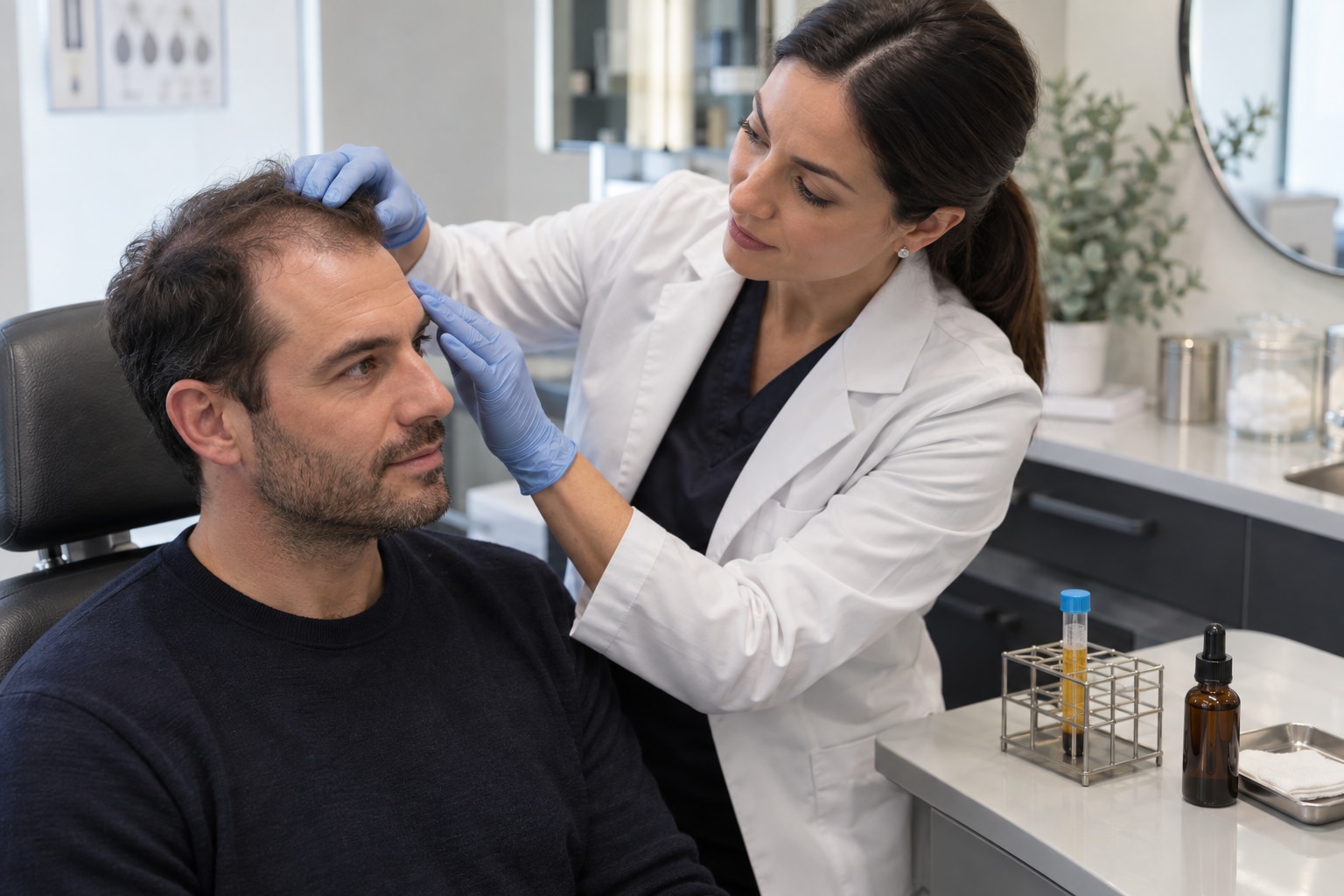
A PRP appointment usually takes about 45–90 minutes. The clinician reviews your diagnosis and medicines, photographs the scalp, cleans and numbs the treatment area, draws a small blood sample, and spins it in a centrifuge. The concentrated platelet-rich plasma is then injected across thinning zones, or applied with microneedling.
Ask which method, platelet preparation and injection depth are being used; protocols differ.
- Expect roughly three sessions, spaced four to six weeks apart. Maintenance sessions depend on your response and the clinician’s plan, so confirm the interval and total course before booking PRP hair treatment in Mumbai.
- Avoid vigorous exercise, alcohol and unnecessary scalp products for the period your clinician specifies, and follow instructions about washing. Tenderness, redness or small injection-site bumps usually settle within a few days.
- Judge the initial course with standardised photographs at baseline, three months and six months after the first session. Hair growth is slow; judging it after one sitting invites a false conclusion.
- Track shedding, hair density, individual hair thickness, widening of the part, crown coverage and hairline recession. Record the same lighting, angle, distance and hairstyle each time.
| Measure | How to compare | What a useful change looks like |
|---|---|---|
| Shedding | Count hair lost during a consistent wash | Fewer hairs over several weeks |
| Density | Same-area scalp photographs or trichoscopy | More visible coverage |
| Thickness | Trichoscopy or calibrated photographs | Fewer fine, miniaturised hairs |
| Coverage | Part width and crown images | A narrower part or less scalp show-through |
A review at six months should decide whether to continue, modify the plan or investigate another cause rather than automatically scheduling more sessions.
Check safety, eligibility and clinic standards before booking
Active scalp infection, fever, unexplained sudden shedding, untreated iron or thyroid disease, a bleeding disorder, or very low platelet counts are reasons to postpone PRP. Avoid booking before diagnosis if you have suspected scarring alopecia or alopecia areata; inflammation or autoimmune disease needs medical assessment first.
Discuss pregnancy, breastfeeding, anticoagulants, immune disorders and cancer treatment with the clinician before proceeding.
For PRP for hair loss in Mumbai, verify these points during the consultation:
- The clinician has examined your scalp with trichoscopy and will order ferritin, thyroid or vitamin tests when your history indicates them.
- A dermatologist or appropriately qualified medical practitioner will perform or directly supervise the procedure.
- The clinic uses sterile, single-use needles and collection tubes, records the preparation method, and explains centrifugation and injection or microneedling.
- The written plan states the number of sessions, four-to-six-week spacing, maintenance schedule, review date, total course cost and what happens if there is no response.
- Consent covers pain, bruising, infection, temporary shedding and alternatives, including medication or transplantation.
Mild scalp tenderness, redness, swelling, pinpoint bleeding and bruising are normal after treatment and usually settle within a few days. Seek medical advice for increasing pain, pus, fever, spreading redness, heavy bleeding or persistent swelling.
Whether you consult Inshine Aesthetics or another Mumbai clinic, ask for standardised before-and-after photographs rather than relying on promises of a permanent cure.
Related services
Hair Treatment PRP Treatment for Hair Regrowth Boost hair growth with Platelet-Rich Plasma (PRP) therapy. View service → |
Hair Treatment Effective Hair Regrowth Treatment Regain your confidence with our advanced hair regrowth solutions. View service → |
Choose a plan based on time, maintenance and the underlying pattern
A useful hair growth treatment comparison prices the entire plan: diagnosis, initial course, maintenance, travel, time off, side effects and the next step if density does not improve. A single PRP sitting is not comparable with one month of minoxidil or a transplant graft quote.
| Option | Time and maintenance | Cost and failure check |
|---|---|---|
| PRP | About three sessions four to six weeks apart, then variable maintenance; review after several months. | Ask what preparation, injections and maintenance include; confirm the clinician’s qualifications and fallback plan. |
| Minoxidil | Daily topical use; stopping usually forfeits maintenance gains. | Include years of medication, scalp irritation and adherence; useful mainly for pattern loss. |
| Finasteride or dutasteride | Daily treatment with medical monitoring; benefits depend on continued use. | Discuss sexual, mood and pregnancy-related risks before comparing long-term cost. |
| Oral minoxidil | Daily, prescribed monitoring for blood pressure, pulse and unwanted hair. | Compare follow-up and adverse-effect management, not just tablet price. |
| Laser device | Repeated home or clinic use for months, with modest expectations. | Verify wavelength, dose and schedule; generic salon light is not equivalent. |
| Microneedling alone | Repeated sessions; technique and infection control matter. | Check operator training and whether evidence fits your diagnosis. |
| GFC or exosomes | Protocols and evidence vary; maintenance is unclear. | Demand ingredients, preparation details and a failure policy. |
| Combination treatment | More appointments and costs, but can stabilise pattern loss while adding PRP. | Confirm which component addresses the diagnosis. |
| Transplantation | One operation plus recovery and lifelong planning for progressive loss. | Assess donor supply, surgeon credentials and revision risk. |
For hair regrowth options in Mumbai, choose the plan that matches the diagnosis, your ability to maintain it and the consequence of failure—not the cheapest first appointment.
Frequently asked questions
Which hair-loss conditions is PRP most suitable for?
PRP is primarily studied for androgenetic alopecia, including gradual widening of the part or a receding hairline. Trichoscopy helps distinguish it from shedding, broken hairs and scalp inflammation.
How does PRP compare with medicines and other hair-growth treatments?
Medicines, devices and newer procedures differ in evidence, maintenance, risks and suitability. Compare each option after identifying the underlying hair-loss pattern rather than choosing by procedure name alone.
When should you judge the result of PRP hair treatment?
Do not judge PRP immediately after injections. Assess progress after the planned treatment course and several months of follow-up, using consistent photographs or clinical measurements.
What should you check before booking PRP in Mumbai?
Ask about eligibility, the clinician’s qualifications, sterile blood collection and injection practices, the equipment used, consent, aftercare and the clinic’s response plan for complications.
Related services
Hair Treatment Revitalise your scalp & boost hair growth. What is Scalp Rejuvenation? - Non-invasive treatment to nourish scalp - Exfoliates & stimulates blood flow... View service → |
Hair Treatment Combat Hair Fall with Our Effective Treatments Regain your confidence with our advanced hair fall control solutions. View service → |
Hair Treatment GFC Treatment for Hair Regrowth Stimulate hair growth with Growth Factor Concentrate (GFC) therapy. View service → |
Hair Treatment Revitalise Your Skin & Hair with Korean Exosomes Experience the power of Korean Exosome Therapy for skin rejuvenation and hair regrowth. View service → |
Keywords